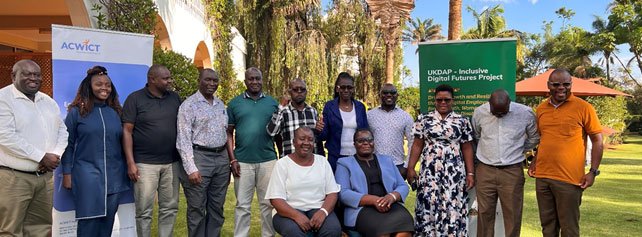
Busia County is steadily positioning itself at the forefront of Kenya’s digital transformation agenda, following a pivotal two-day Implementation Technical Committee Meeting that brought together County government representatives and implementing partners to define the next phase of the UK Government-funded Inclusive Digital Futures (IDF) project.
Convened from 12th to 13th March 2026 by the African Centre for Women, Information and Communications Technology (ACWICT), in collaboration with the Busia County Government, the meeting marked a critical transition, from the online digital skills training to practical application, economic participation, and long-term sustainability within the county’s digital economy ecosystem.
“The progress we are witnessing today reflects strong collaboration between ACWICT, the County Government, and our partners. As we move forward, our focus is on ensuring that these efforts translate into long-term, sustainable opportunities for young people at the county level.”—-Constantine Obuya, CEO, ACWICT
Since the UKDAP IDF project launch on January 13th in Busia County, it has been implemented as a strategic intervention to expand digital inclusion and unlock economic opportunities for youth and underserved populations. Designed as an employability-driven initiative, the project goes beyond basic digital literacy to equip young people with market-relevant skills aligned to emerging economic pathways, including digital agri-preneurship, the gig economy, the creative economy, and IT and device repair.
The IDF Implementation Technical Committee Meeting provided a structured platform to assess progress achieved to date, interrogate participation trends, and align stakeholders on the priorities and operational requirements for the next phase of implementation. Discussions during the first day of the meeting focused on reviewing project performance across key milestones, including mobilisation, training orientation, and track-based digital skills delivery.
Data presented during the session indicated strong participation across several sub-counties and a notable level of gender balance among participants. The project has demonstrated growing alignment between youth interests and local economic opportunities, with high uptake observed in market-relevant pathways such as digital agriculture. However, stakeholders also acknowledged existing gaps, particularly the relatively low participation of persons with disabilities, underscoring the need for more deliberate and targeted inclusion strategies moving forward.
Beyond participation metrics, the meeting highlighted a broader strategic shift in project delivery. While the initial phase of implementation required a centralised approach to ensure quality and standardisation of training, stakeholders emphasised the importance of transitioning toward a county-led model that strengthens localisation, ownership, and sustainability. This shift places the Busia County Government at the centre of project implementation, with a clear mandate to embed digital skills development within existing county systems and economic structures.
“This project presents a strategic opportunity for Busia County to enhance youth employability and digital participation. We are committed to working closely with partners to ensure that its impact is both inclusive and sustainable.” — Hon. Patricia Okello, Chief Officer, Strategic Partnerships, ICT & Digital Economy, Busia County Government.
The second day of the meeting focused on operational planning and strategic alignment, with particular emphasis on the rollout of county-level physical bootcamps and the development of structured pathways to enable youth transition into employment, entrepreneurship, and digital service provision. Participants worked collaboratively to define priority actions, including confirming training venues, clarifying coordination roles between ACWICT and the County Government, and strengthening linkages between trained youth and local economic opportunities, such as SMEs, cooperatives, and employer networks.
A central theme that emerged from the discussions was the need to anchor digital skills training within real market demand. In this regard, the integration of Artificial Intelligence (AI) literacy and SME-linked pathways was identified as a key strategic component of the project’s next phase. Through partnerships with organisations such as the Federation of Kenya Employers, the project is positioning participants to engage in the evolving digital economy by equipping them not only with technical skills but also with the capacity to apply them in income-generating activities.
The project’s design reflects a clear end-to-end pathway, from skills acquisition to economic participation. All participants undergo foundational digital literacy training aligned with national certification frameworks, followed by track-based specialisation and mentorship. This is complemented by AI literacy training, ecosystem partnerships, and structured transition mechanisms that link graduates to opportunities in freelancing, employment, and enterprise development.
Importantly, the meeting underscored the need for robust monitoring, evaluation, and learning systems to track participant progression and document project impact. Stakeholders emphasised the importance of capturing both quantitative data and lived experiences of beneficiaries to inform adaptive project management and strengthen accountability to partners and donors.
A major outcome of the meeting was the joint development and validation of the Busia County IDF Implementation Workplan for the period January to June 2026. The workplan provides a clear and actionable roadmap for the next phase of implementation, outlining key activities such as the rollout of physical bootcamps in April 2026, the facilitation of youth transition into employment and enterprise pathways in May 2026, and the establishment of sustainability and institutionalisation mechanisms to support long-term impact.
The planned bootcamps will play a central role in consolidating learning by providing hands-on, practical training that equips participants with real-world skills aligned to local economic opportunities. At the same time, the project will facilitate access to blended financing, government youth funds, and private-sector opportunities, enabling graduates to establish and scale digital enterprises. Structured pathways into freelancing and online work platforms will further expand income-generating opportunities for young people across the county.
Equally significant is the project’s emphasis on institutionalisation and sustainability. By engaging county departments, vocational training institutions, and policy processes, the IDF Project is laying the foundation for long-term integration within county systems. The Technical Committee, comprising representatives from key departments including ICT, Youth, Communication, and Monitoring and Evaluation, will continue to provide strategic oversight, ensuring that project delivery remains aligned with county development priorities and responsive to emerging needs.
The meeting also reaffirmed the importance of strong coordination and accountability mechanisms. Agreed action points included the establishment of a dedicated communication platform for real-time coordination, institutionalisation of weekly technical meetings, strengthened documentation and reporting systems, and enhanced mentorship support for participants as they transition into employment and enterprise pathways.
As the meeting concluded, stakeholders expressed a shared commitment to ensuring the project delivers tangible, sustainable outcomes for the youth of Busia County. The Director of Public Administration at the Busia County Government reaffirmed the county’s full support, recognising the project as a strategic opportunity to empower young people, strengthen digital participation, and contribute to inclusive economic growth.
Ultimately, the Implementation Technical Committee Meeting marked more than a routine project review; it signalled a decisive shift toward impact. By aligning stakeholders, strengthening systems, and embedding market-driven pathways, the Inclusive Digital Futures Project is demonstrating how digital inclusion can translate into real economic transformation at the county level.
As Busia moves into this next phase, the focus is clear: ensuring that every young person trained through the project is not only equipped with digital skills but also able to apply them to build livelihoods, create enterprises, and participate meaningfully in Kenya’s growing digital economy.