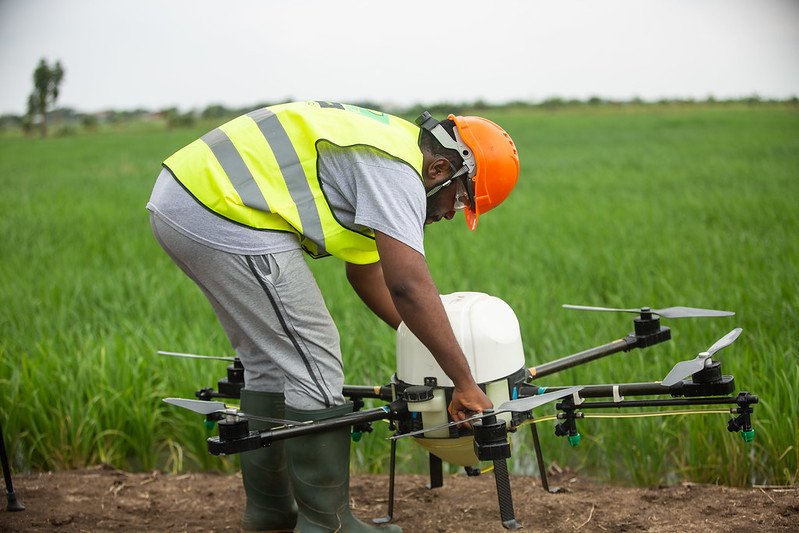
The Digitally Enabled Gender Equity and Social Inclusion (DEGESI) Project, funded by the UK Government’s Digital Access Programme (UKDAP) through the British High Commission in Nairobi, implemented by ACWICT, and coordinated locally by NORRADS, was designed to strengthen socio-economic empowerment among digitally excluded groups across Kenya.
Its focus extended to women and girls, senior citizens, smallholder farmers, youth, and persons with disabilities, aiming to equip them with the digital skills required to access online government services, digital agricultural platforms, and digital livelihoods in a safe and secure environment. The project used the ICT Authority’s (ICTA) national digital skilling curriculum to deliver both foundational and basic digital competencies. Alongside skills training, DEGESI facilitated awareness of the benefits of digital development, cyber hygiene, climate adaptation resources, market information systems, and pathways for farmers to tap into formal supply chains.
In Chepkum, a community with over 600 smallholder farmers organised under the Chepkum Farmers Multipurpose Cooperative (SACCO), these interventions created a powerful example of how digital inclusion can transform agricultural productivity and household incomes.
The Situation Before: Production Without Market Power
Before DEGESI’s intervention, Chepkum farmers were actively cultivating sorghum, seed maize, beans, and other crops, yet they struggled to translate their hard work into meaningful income. Although production was consistent and the cooperative was well organised, the farmers had limited access to profitable and predictable markets. They relied entirely on local brokers who set prices, often offering rates that were too low and unstable to sustain growth. This uncertainty made it difficult for farmers to plan investments, expand production, or improve their livelihoods.
At the same time, the SACCO lacked several essential digital tools and skills that could have strengthened its bargaining power. Members had no access to reliable digital market information and were therefore unable to compare prices or identify better buyers. They had limited capacity to communicate with potential partners online, and farmers lacked the knowledge to use climate-smart applications, such as weather apps or advisory platforms, to support better farm planning. Additionally, the cooperative lacked digital systems for recordkeeping, aggregation, or formal negotiation with large buyers. These gaps collectively constrained Chepkum’s income potential and perpetuated the very inequalities that DEGESI aimed to bridge, underscoring the urgent need for digital empowerment to unlock the cooperative’s full economic potential.
Action Taken: Digital Skills as a Bridge to Agricultural Markets
To strengthen the cooperative’s readiness for formal markets, Nickson Kimutai, a 28-year-old Community Digital Champion (CDC) and young leader trained through the UKDAP-funded national DEGESI programme using the ICT Authority’s approved digital skills curriculum, became the cooperative’s key resource person for digital transformation. He began by equipping farmers with foundational digital literacy before advancing to more technical competencies for SACCO management. Nickson’s training helped farmers understand how to use smartphones not only as communication tools, but as essential agricultural companions. They learned to access digital agricultural services, compare local and national market prices, and retrieve weather and climate advisories that support more accurate planting and harvesting decisions.
Enhancing SACCO Management Capacity
Through tailored training sessions, SACCO officials were introduced to a suite of digital tools and competencies essential for engaging with formal markets. They learned how to maintain accurate digital records and aggregate data, communicate professionally through online platforms, and manage e-commerce interactions with potential buyers. The officials also acquired the ability to prepare and share digital documents for contract negotiations and became proficient in using Microsoft Teams for virtual meetings. In addition, they explored digital marketing strategies using WhatsApp and other social media platforms to reach wider networks. These enhanced skills marked a turning point for the cooperative. Chepkum SACCO officials confidently engaged with major agricultural buyers through virtual meetings. They held online negotiations with East Africa Breweries Ltd (EABL) for sorghum contracting and initiated discussions with the Kenya Seed Company for seed maize supply.
Digital Linkages Strengthened Productivity and Farmer Incomes
Digital inclusion enabled Chepkum farmers to access real-time market prices, reducing dependence on brokers and securing better returns. With climate-smart advisories and digital extension services, farmers improved their planting decisions, crop quality, and yields. Digital record-keeping enhanced the SACCO’s credibility with formal buyers, while improved digital literacy strengthened their capacity to aggregate produce and negotiate higher-value bulk contracts. These shifts directly supported DEGESI’s goals of boosting food security, nutrition, incomes, and resilient livelihoods. As the SACCO chairperson noted, digital skills finally opened market doors that farmers had long been unable to access. The impact was felt on the ground as the SACCO chairperson put it, “We always had the crops, but now we finally have the market. Digital skills opened a door we did not know how to knock on.” His words capture the profound shift from isolation to opportunity brought about by digital empowerment.
A Scalable Model for Digital Agriculture
The presence of locally rooted CDCs, the use of ICTA’s national digital skilling curriculum, targeted awareness-raising, and improved access to digital platforms helped DEGESI convert a previously disconnected cooperative into a digitally equipped organisation capable of negotiating confidently with national buyers. Continuous mentorship, access to digital devices, and affordable internet connectivity will be essential. Nevertheless, the pathway forward is clear: when farmers are digitally empowered, they become economically empowered, and as their incomes rise, the benefits ripple outward, strengthening households, cooperatives, and entire communities across Elgeyo Marakwet and beyond.