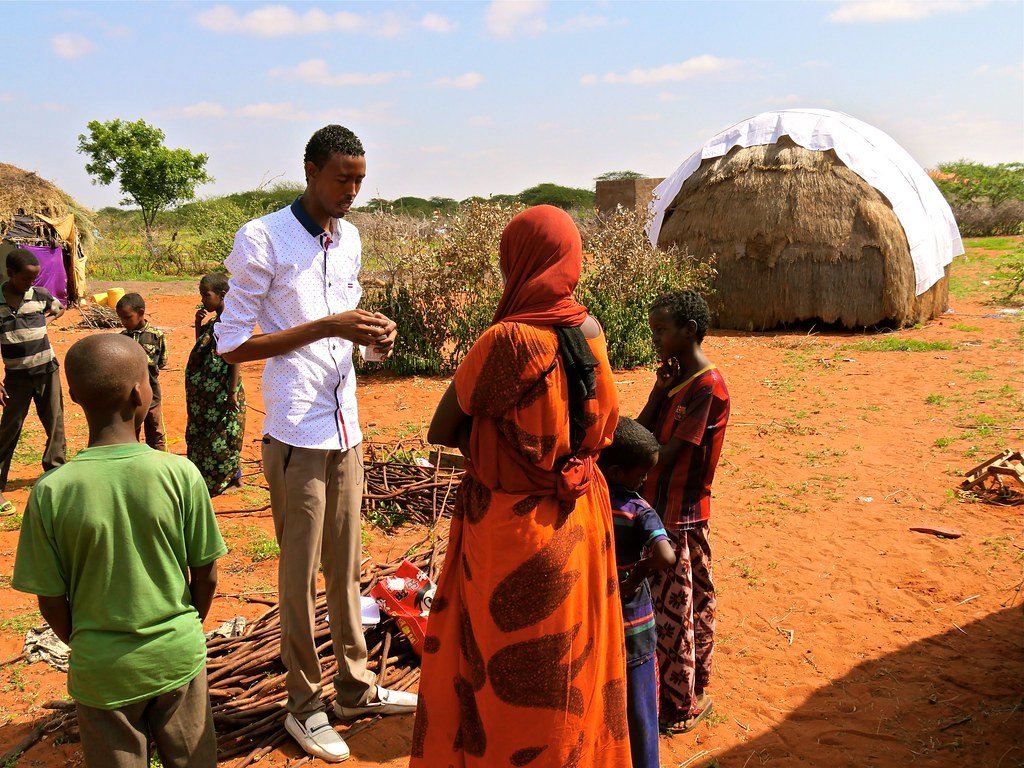
For years, Wajir County faced a defining challenge. As local job opportunities narrowed, countless young people felt compelled to search for possibilities beyond home, unsure of the paths available to them locally.
It was a journey paved not with promise, but with peril as human traffickers took advantage of their vulnerability, directing many along routes through Libya on their way to Europe, where countless youth were detained, tortured, and forced to pay exorbitant ransoms. Families already surviving on the margins were pushed into crushing debt, selling livestock and land to keep hope alive. This was more than a socio-economic challenge; it was a quiet erosion of Wajir’s future. Idle young men wandered between boredom and frustration; young women were entirely locked out of opportunity. With limited digital exposure and no income pathways, the county risked losing its most dynamic generation to unsafe migration or to daily routines that drained potential and weakened community cohesion. At the heart of the crisis was a simple truth: without skills, purpose, or opportunity, youth drifted, and their drift carried a community with them.
The DEGESI Initiative: A New Door Opens
Into this urgency stepped the Digitally Enabled Gender Equity and Social Inclusion (DEGESI) project, funded by the UK Government’s Digital Access Programme (UKDAP) through the British High Commission, implemented by the African Centre for Women, Information and Communications Technology (ACWICT), and coordinated at the county level by Worthy Vision. Rather than offering temporary solutions or one-off trainings, DEGESI, implemented from December 2024 to October 2025, introduced something far more transformative: a youth-centred digital skills ecosystem tailored to Wajir’s realities and rooted in inclusion. A total of 1,687 young people, including girls, boys, recent school leavers, unemployed graduates, and previously idle youth, enrolled in an online digital learning initiative. DEGESI delivered impact across multiple pathways from digital inclusion for all and gender empowerment to youth employment, innovation, and strengthened livelihoods. It expanded access to digital public services while fostering stronger partnerships and community networks that anchored long-term change and collaboration with local partners. It intentionally included vulnerable groups to ensure no one was left behind.
The model was not just about teaching skills; it was about awakening possibilities. The curriculum covered digital literacy, communication, online work-readiness, and problem-solving, delivered through engaging assignments and collaborative tasks. More importantly, DEGESI extended beyond training. After completing their learning, Community Digital Champions (CDCs) were contracted to teach others, earning stipends as they cascaded knowledge across neighbourhoods and villages. This triple approach, learn, then teach, and earn, created momentum. Young people who once spent afternoons idly were now juggling deadlines, group projects, and community trainings while earning. Their confidence was restored and ambition reignited.
Partnerships strengthened the movement. Religious leaders mobilized youth with remarkable influence, emphasizing the program’s moral and social value. County officials added legitimacy, aligning DEGESI with broader development priorities. With every actor pulling in the same direction, DEGESI became not just a training program, but a community-endorsed pathway to hope. For many, it was the first time they realised they could learn, earn, and lead, without crossing a border.
When Youth find Purpose, Migration Loses Its Pull
The results were striking. With 1,798 youth engaged in structured digital learning and community training, Wajir witnessed a noticeable decline in unsafe migration attempts. The 1,798 youth then trained over 42,000 citizens on foundational digital skills. Calls from desperate mothers to local radio stations, once common, begging for help with ransom payments began to fade. Even more powerful was the rise of peer-to-peer digital learning, driven by CDCs who were now earning income while teaching others. What began as a training became a self-sustaining community movement. Religious leaders and county officials openly testified to the transformation: youth who were once idle were now busy, disciplined, motivated, and mentoring their peers. The mindset shift, from migration to innovation, became one of DEGESI’s most profound achievements.
Impact: A Community Moves from Fear to Resilience
The DEGESI project reshaped not only individual futures but the resilience of the entire county. By reducing the vulnerability of young people to traffickers, Wajir families were spared the emotional trauma and crushing financial burden of ransom payments. Embedded peer-to-peer training ensured that digital skills did not remain confined to classrooms but spread organically through villages and estates.
The stipend-based model added dignity and provided immediate livelihood benefits. CDCs became local role models, proof that income, purpose, and leadership could grow right at home. The long-held belief that “leaving Wajir is the only way to succeed” began to ease as more young people saw viable opportunities at home. Community leaders now advocate for wider expansion, recognizing DEGESI as both a stabilising initiative and a driver of youth-led development. The long-term impact is evident: local, digital, and inclusive solutions can gently shift young people away from unsafe migration patterns and open up stronger pathways for opportunity at home.
Lessons Learned
Wajir’s journey through DEGESI offered vital lessons:
- Structured engagement transforms youth behaviour. When provided with meaningful work and purposeful learning activities, young people naturally move away from unproductive routines.
- Peer-to-peer teaching accelerates ownership. Contracting CDCs created scalable, community-rooted impact and reduced reliance on external trainers.
- Local leaders are indispensable. Religious and county leaders ensured cultural acceptance and sustained mobilization.
- Economic incentives drive uptake. Stipends provided motivation and addressed immediate livelihood needs.
Prevention is more potent than rescue. By reducing idleness and expanding opportunity, DEGESI cut off unsafe migration at its root.